How to Choose a Legacy Planner for Family Handoffs
What a legacy planner should hold, how paper, vault and self-sending planners compare, and six questions to ask before you pick one for your family.
A legacy planner is where you write down what your family would need if you could not tell them yourself. The bank, the mortgage, which bills autopay, the insurance policies, where the will is and who to call. Plenty of planners will give you room for all of it. The part that decides whether it helps is simpler: when the day comes, how does it get to the person who needs it?
This guide covers what a legacy planner should hold, the three shapes they come in, and the questions to ask before you pick one.
Table of Contents
- What a legacy planner is, and what it is not
- What a good legacy planner holds
- Paper, vault or a planner that sends itself
- Six questions to ask before you pick one
- Where KinSwitch fits
- Legacy planner questions
What a legacy planner is, and what it is not
A legacy planner is a working record of your household. It can be a printed workbook, a binder, a shared folder or an app. Whatever the format, its job is to answer the questions your family would otherwise be left guessing about.
It is not a will. A will says who gets what and, for many parents, who looks after the kids. A power of attorney lets someone act for you while you are alive but cannot act yourself. Both are legal documents, usually drafted with an attorney. A legacy planner sits next to them and holds the everyday details they leave out, like which account pays the electric bill or who your insurance agent is.
What a good legacy planner holds
Start with money, because money is what stalls first.
- Bills: every recurring bill, how it gets paid and from which account
- Accounts: which banks and retirement accounts you have, and who to call at each one
- Insurance: each policy, the insurer and the agent's phone number
- Documents: where the will, deeds, titles and tax returns are kept, and who your attorney is
- People: who should be told first, and who can help with what
- Your own words: a note or letter for the people you love, not just logistics
Leave passwords out of the planner. Write down which password manager you use and point your family to its own hand-off or recovery steps. Our password manager break-glass kit walks through that part, and passwords after death helps you decide who should get access to what.
If you want a full list to work from, the household bills, insurance and accounts checklist and the digitized death binder checklist cover the items most people forget.
Paper, vault or a planner that sends itself
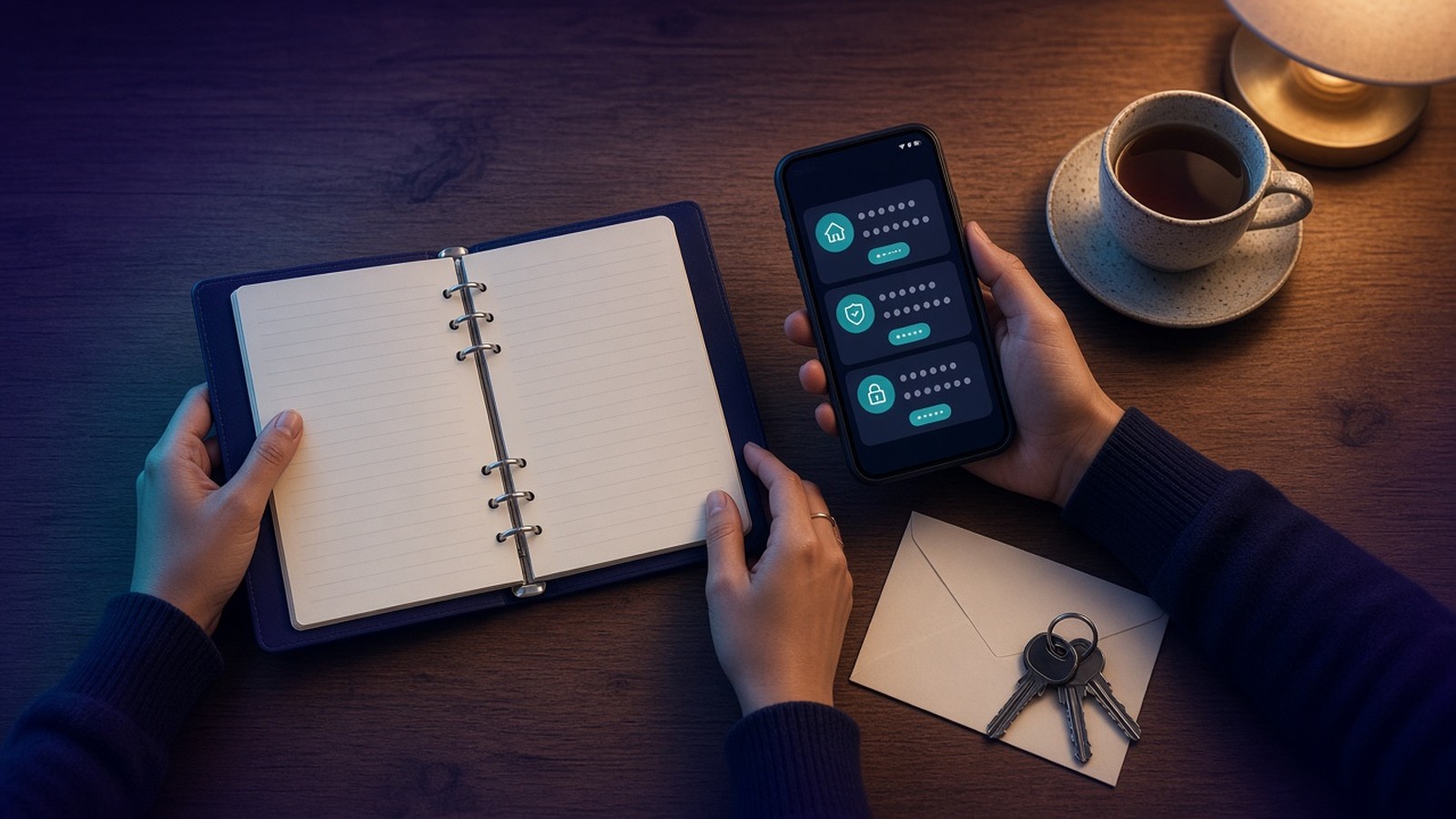
Every legacy planner falls into one of three shapes. The easiest way to compare them is to ask one question: who starts the handoff?
A paper workbook or binder. It is simple and it works without any account. It also depends on someone finding the right drawer, and it goes out of date the first time a bill or a policy changes. If you go this way, put a date on the cover and set a reminder to review it. Our guide to keeping a death binder current has a routine for that.
A document vault or shared folder. It keeps things sorted and easy to update. But it waits. Your family has to know it exists, know how to get in, and in some services go through a request process before they see anything.
A planner that sends itself. You check in on a schedule you choose. If you stop checking in, it sends what you wrote to the people you named. Nobody has to go looking, and nobody has to know a login first.
| Paper workbook | Vault or shared folder | Planner that sends itself | |
|---|---|---|---|
| Who starts the handoff | Whoever finds it | Your family, once they know it exists | It sends on its own after missed check-ins |
| Easy to keep current | Reprint or rewrite | Yes | Yes |
| Your family needs an account | No | Usually | Depends on the service |
| Different things for different people | Hard | Sometimes | Depends on the service |
Six questions to ask before you pick one
- How does it reach your family? Someone has to find it, ask for it, or receive it. Know which one.
- Do the people you name need their own account? On a hard week, every extra sign-up is one more thing to get stuck on.
- Can different people get different things? Your spouse may need the finances while your brother only needs the house notes.
- How easy is it to update? Bills, cards and policies change every year. If updating is a chore, it will go stale.
- What protects against a mistake? Look for reminders before anything goes out, and a way to see what each person would receive.
- Where do the passwords go? The right answer is your password manager, with its own hand-off steps. Not the planner.
Where KinSwitch fits
KinSwitch is a legacy planner that sends itself. A KinSwitch handoff starts with notes and documents in your Library. You can start from a template, like emergency contacts, medical information or household operations, and fill in the blanks in your own words. You can also keep a journal for the people you love and export it as a PDF.
Then you pick who gets what. Each person receives only the items you assigned them, so your spouse can get the money notes while your brother gets the house notes. You check in with one tap, on a schedule you choose, from daily to monthly or longer. If you stop checking in, reminders go out across a grace period you set yourself, so an accidental release is rare. Only if you never respond do the people you named get a plain email with secure links. They do not need an account to open it, and you can preview exactly what each person would receive before anything goes live.
Everything you store is encrypted, and every access is logged. Keep the passwords themselves in your password manager, and use your KinSwitch note to say where things are and who to call.
To see what lands in your family's inbox, read what your family actually receives when your switch fires. If you are ready to write the first page, Start a free 30-day trial.
Legacy planner questions
Is a legacy planner the same as an estate plan?
No. An estate plan is the set of legal documents, like a will, a trust and powers of attorney. A legacy planner holds the practical details that go with them: the accounts, the bills, the policies and who to call. Most families need both.
Should couples keep one legacy planner or two?
Many couples do better with one each, because each person knows different things. One of you may know the mortgage and the car loan, the other the retirement accounts and the kids' school contacts. Each of you writes your own part and names the other to receive it.
What should I write first?
The money page. List the bank accounts, the bills that autopay, the insurance policies and where the will is kept. One page is enough to start, and you can add the rest over time.